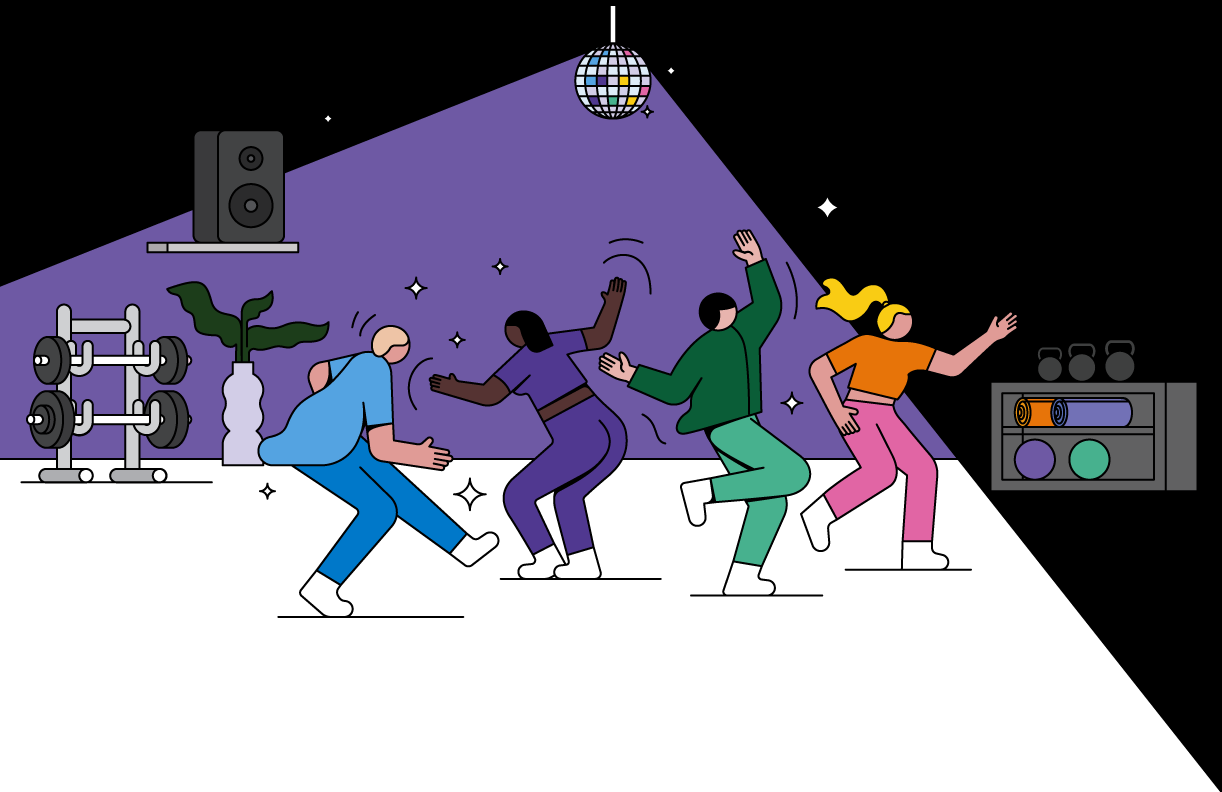
Dance Cardio is Back: Why Dance Fitness is Dominating Schedules Again
Lorem ipsum dolor sit amet, consectetur adipiscing elit.
Dance Cardio is Back: Why Dance Fitness is Dominating Schedules Again
Inspire360 Global Fitness Newsletter, September Edition, Issue 43
Maybe it was the reappearance of leg warmers at your local activewear boutique… or the disco ball’s sudden surge in popularity on TikTok… or the choreography videos popping up on your social media feeds. But there have been signs.
And those signs are pointing to a very 90s trend making a comeback: dance fitness is becoming the most requested class on your schedule again… perhaps for the first time in a long time. Clubs are seeing real demand, and members are showing up ready to sweat to a beat instead of grinding to a countdown clock.
The Classics Never Died
You don’t have to don a neon leotard to get back into some step-aerobics inspired dance exercise; these classes have been adapted to a more modern crowd. And it’s having a genuine cultural moment: local studios are reporting a resurgence that spans members from their 20s all the way to their 70s, and the brand just brought on a new creative agency specifically to court a younger crowd while leaning on more than five decades of name recognition to stay relevant against giants like Zumba, Peloton, and Equinox. Jazzercise’s resurgence feels particularly personal (and exciting!) being another fitness company headquartered right here in Southern California since 1969.
Zumba, meanwhile, is proving it’s no fad, either (and hasn’t been for many years!). A well-run class can burn the same amount of calories per hour as a CrossFit or heavy rowing session. Meanwhile, step aerobics is getting fresh choreography with new music, as opposed to staying stuck in the early 90s.
What this means for you: if you retired your dance-based formats during the strength-training boom, this is the moment to bring them back. Update your sound system and refresh your playlist — it’s go time.
Pump Up the Jams: The New Wave is Here
A crop of newer dance concepts is responsible for the new wave; they’re taking the same “cardio meets nightclub” formula and running with it. Here’s what that looks like right now:
- HIGH Fitness reimagines old-school step aerobics with a zero-equipment format built around alternating high-intensity and active-recovery intervals, designed to keep members out of a plateau.
- Dance Church has turned judgment-free, all-levels dance into a national community, not just a class. Certified teachers are now leading sessions coast to coast in LA, Seattle, New York, Chicago, and Portland. It has no religious affiliation and gets its name from class takers reclaiming their Sunday morning ritual, creating a space for community and movement.
- Madhouse Dance built a cult following around the “dance party workout” model: lights down, music up, no experience required, with a bestselling cardio format alongside a spicier, more mature after-hours offering. They're even taking the studio-as-nightclub concept a step further by launching "Mad Girls Club" with unstructured, DJ-driven dance nights where members get dressed up, socialize, and dance purely for fun without following formal class choreography.
- SHINE FIT has taken musical theatre cardio and turned it into one of the hardest classes to get into in Toronto — its Yorkville studio has run at a 130% waitlist on every class since launching the format, with members paying six months up front just to book further out.
- 305 Fitness built an entire brand on “the most fun workout ever,” running dance cardio parties across five U.S. cities plus a livestreamed at-home option.
- Strapped Fitness’ SYNC class strips things down even further: no equipment, no complicated choreography, just repeatable movement to the beat, proving you don’t need elaborate routines to get members moving.
What this means for you: the format doesn’t have to be complicated to work. The common thread across every one of these brands is atmosphere over technicality. Think: approachable choreography, a great sound system, and a room that feels like a real party. Swap the open bar for soaring endorphins.
How to Bring the Party to Your Schedule
The practical takeaway: Why these clubs are winning, and how you can replicate the model.
- Set the scene. Lower the lights, raise the volume: the clubs winning at this right now are highly experiential. Invest in the ambiance (again, lighting and sound systems make a difference!), and treat dance cardio like the main event.
- Lead with the burn. For the members who respond to numbers, show them the metrics: a well-run dance cardio session can torch 500 to 800 calories in an hour — meaning Jazzercise can rank right up there with your hardest HIIT offering. Be explicit with this messaging.
- Theme your classes. A Beyoncé hour, a 2000s throwback class, a Broadway-inspired session, country music — themed programming is exactly what’s driving the waitlists at studios like SHINE FIT. Pick a few popular artists or eras that you know your members already love, and build classes around them.
- Don’t sleep on the classics. Jazzercise and Zumba are seeing renewed demand across all age groups. If you cut them from the schedule, this is a good quarter to bring them back.
And remember… fitness that feels fun (and less like work) is what keeps people coming back, week over week, year over year.
—-------------------------------------------------------------------------------------
Inspire360 Club Bulletin
We have launched Inspire360 Club, a game-changing platform built to redefine health club education and unite the industry for the first time under one comprehensive, modern learning ecosystem. #GameChanged. Book a demo of Inspire360 Club at: www.inspire360.com/club
What's New This Month:

Inspire360 Club just launched the Performance & Resilience Career Pathway, bringing together Patrick McKeown’s Functional Breathing course, Nordic Wave’s Cold Resilience Level 1 course, & Future Practice’s Stress Resilience course. That’s more than $2,800 worth of education, now included for every trainer on Inspire360 Club at no additional cost.
—-------------------------------------------------------------------------------------
Industry Happenings:
Upcoming Events:
- Runningman Festival, September 18-20, 2026, Rome, Georgia
- HFA European Congress, September 24-26, 2026, London, UK
- Midwest Mania®, October 2-4, 2026, Chicago, Illinois
- Mental Health America Conference, October 8-9, 2026, Washington, DC
- AB Show 2026, November 17-19, 2026, Orlando, FL
- ICAA Conference and Expo, November 17-19, 2026, Orlando, FL
—-------------------------------------------------------------------------------------
Upcoming Workshops in September & October:
- 20+ workshops from ART
- 20+ workshops from Merrithew
- 20+ workshops from Peak Pilates
- 20+ workshops from Spinning®
- 20+ workshops from TRX®
- 15 workshops from Exos
- 8 workshops from Oxygen Advantage
- 7 workshops from CFSC
- 3 workshops from Gray Institute
- 2 workshops from Power Plate
—------------------------------------------------
Industry News:
- GLP-1 users spend nearly 4X more on fitness, new study finds.
- Life Time launches LT Social, a new private social community.
- Alpha Fit Club goes big on fitness racing with 1,550-athlete event.
- GymNation turns out the lights with Dans Le Noir: Class in the dark.
- Amazon and HYROX announce global partnership.
- Hilton has launched Signia Restore, an “immersive” wellness concept.
—----------------------------------------------------
Thanks for Reading!
This newsletter was brought to you by Kathie Davis, Peter Davis, Ravi Sharma, Dominique Astorino, and the Inspire360 team.
—----------------------------------------------------
A Note from Peter & Kathie
The industry is changing rapidly, and we are here to help you sift through all the noise and get to the good stuff. Every month, we'll bring you trending topics and the inside scoop that we believe is paramount for fitness professionals to know.
Keep Inspiring,
Peter & Kathie Davis
Want to get this delivered straight to your inbox? Sign up to receive the Inspire360 Global Fitness Newsletter here.